A quiet place to pause, breathe, and reconnect — with yourself, with others, and with something greater.
Our Campus
Our campus is more than a place — it is shaped by reflection, light, and the stories shared within it. From the quiet path of the labyrinth to the colors of stained glass and the voices captured in art, each element invites us to pause, reflect, and reconnect.
A Path Inward
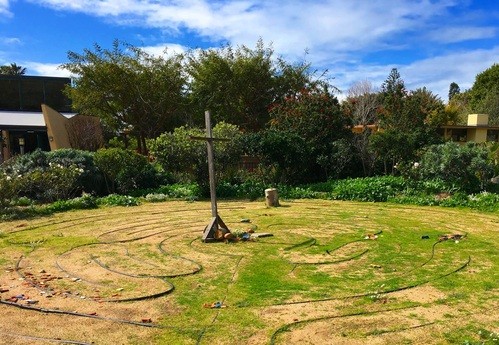
The labyrinth is an ancient pattern, believed to be over 3,500 years old. Its exact origin remains unknown, yet its form appears across cultures and continents around the world. A single, winding path leads gently to the center and back out again — a quiet journey inward and outward. Today, the labyrinth is used as a walking meditation, a way to pray, and a space to become more aware of God’s presence.
Its circular shape offers a sense of safety and wholeness. Within its bounds, one is invited to slow down, release worry, and simply be — even if only for a few moments.
Its circular shape offers a sense of safety and wholeness. Within its bounds, one is invited to slow down, release worry, and simply be — even if only for a few moments.
A Window of Light and Legacy
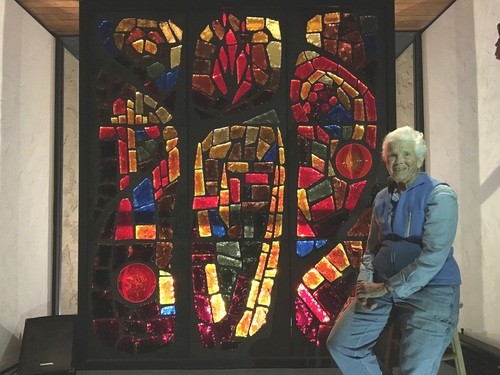
Toby Schreiber (1925–2023), who designed this stained-glass window, was a founding member of MUMC and a celebrated artist whose legacy endures.
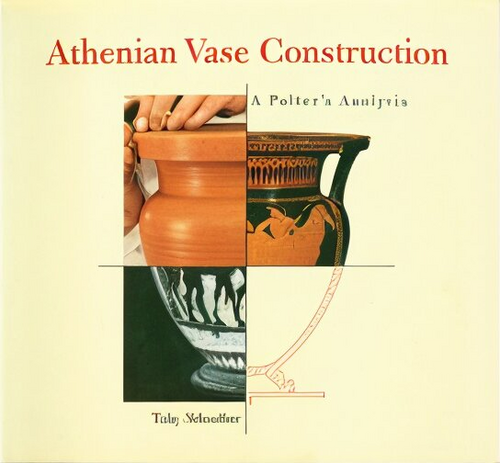
Her book is also available to download through the Getty Virtual Library.
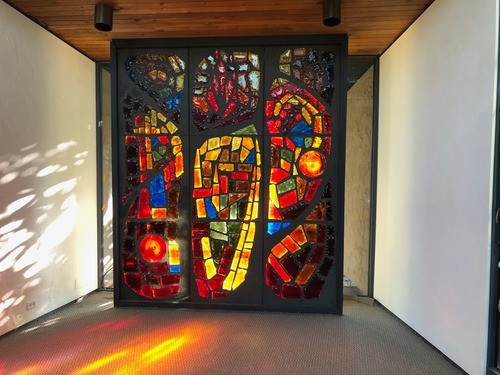
Our spectacular stained-glass window was designed and created in 1966 by Toby Schreiber. Toby and her husband, Dick, were founding members of MUMC. Toby was an accomplished artist, writer, and athlete, as well as a renowned potter in the tradition of Ancient Greek vessels. Her definitive book, Athenian Based Construction: A Potter’s Analysis, was published by the Getty Museum and is considered “…the finest and most important book on Greek vases in the last twenty years,” according to the Bryn Mawr Classical Review.
A Phone to the Wind
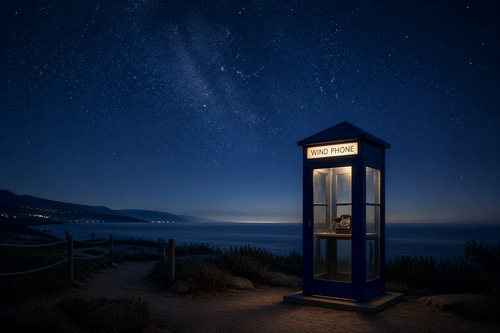
Sacred Grounds are shaped by moments — quiet steps, passing thoughts, and the space we give ourselves to pause.
As part of this landscape, we are beginning to imagine a new element: a Wind Phone.
A simple, unconnected phone placed in a small booth, where words can be spoken freely — to someone missed, to a memory, or simply to the wind.
It is not yet built.
It is something we are gently bringing into being.
As part of this landscape, we are beginning to imagine a new element: a Wind Phone.
A simple, unconnected phone placed in a small booth, where words can be spoken freely — to someone missed, to a memory, or simply to the wind.
It is not yet built.
It is something we are gently bringing into being.